Too drunk to drive? New California law could give you a free ride

Originally published in the Dec. 25, 2017 print edition of the Sacramento Bee, on SacBee.com as part of Capitol Alert and on both The Modesto Bee, The Fresno Bee and San Luis Obispo Tribune websites.

Sac Bee Full Page Local Page 1It’s an all-too-familiar scene in Sacramento. A group of friends heads to midtown for a night of partying and drinking, but one friend has to miss out on the fun and stay sober to be the designated driver.

A new law that takes effect Jan. 1 may not only let everyone join in on the fun, but it’ll also mean more money for the bubbly.

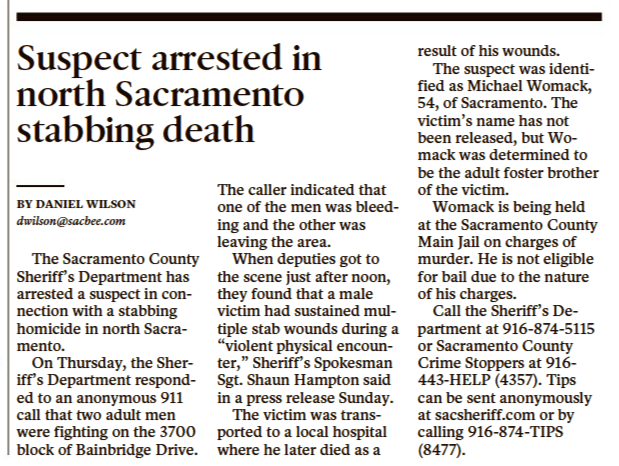
Under Assembly Bill 711, alcohol manufacturers and licensed sellers can offer free or discounted rides to transport drinkers home safely through ride-sharing services, taxicabs or other ride providers.

Vouchers or codes can be given to alcohol sellers or directly to consumers, but cannot be offered as incentives to buy a company’s product. Current law restricts alcohol licensees from offering discounts of anything more than inconsequential value to consumers, though liquor and wine manufacturers have been temporarily allowed to pay for rides for people attending private, invitation-only events.

The measure, by Assemblyman Evan Low, D-Cupertino, would relax the rules to expand that program, allowing alcohol manufacturers to underwrite free or discounted rides in all cases.

Low noted that thousands attending Super Bowl 50 in Santa Clara in 2016 didn’t have options to get home safely after drinking. Forty-four other states and the District of Columbia allow liquor manufacturers to pay for free or discounted rides, according to a legislative analysis of the bill.

The bill cleared the Legislature unanimously, and was supported by major beer manufacturers as well as ride-sharing company Lyft. Last year, Anheuser-Busch partnered with Lyft to offer rides home across 33 “safe ride” programs throughout the nation.

Katja Zastrow, vice president of Corporate Social Responsibility for Anheuser-Busch, said since teaming up with the ride-sharing service, the program has provided more than 64,000 rides. “Drunk driving is 100 percent preventable and offering safe rides is one way that we can have a real impact on reducing (it),” she said.

The bill was opposed by Alcohol Justice, a San Rafael-based nonprofit that lobbies against policy thought to promote the “alcohol industry’s harmful practices,” according to the group’s website.

Carson Benowitz-Fredericks, the organization’s research manager, said AB 711 could encourage people to drink more. Alcohol Justice says overconsumption of alcohol costs California $35 billion a year and causes 10,500 deaths annually.

“The idea that drunk driving is the only harm from alcohol is a real misunderstanding of alcohol harm,” Benowitz-Fredericks said.

The main concern from both Benowitz-Fredericks and the Rev. James Butler, the executive director of the California Council on Alcohol Problems, is that though the bill says the rides should be provided in order to get drinkers safely home, there is no real way to prevent consumers from using the free rides to go to another drinking spot.

“If they get free transportation, maybe instead of two beers they have six,” Butler said. “And when people overconsume alcohol, they make bad decisions.”

Posted in Freelance, Sacramento Bee, The Sacramento Bee | Tagged , , , , , , , , , , , , , | Leave a comment

The lasting effects of suicide and how the numbers add up in Yolo County

Originally published in the Dec. 20, 2017 print edition of the West Sacramento News-Ledger

31

Dillon Weatherly and Felicia Greenwood Weatherly.

For the families of those who decide to take their own lives, suicide rates aren’t just a set of data, but a real reminder of the devastation and life changing effects self-inflicted deaths have on those left behind.

Yolo County resident and 21-year River City High School music teacher Felicia Weatherly’s son Dillon, who was 14 at the time, died by suicide last year during a camping trip when he was left by himself at the family’s campsite after he got into an argument with his parents.

Weatherly said she and her husband along with their other children went on a hike and when they returned, they could not find Dillon.

Weatherly discovered Dillon just inside the door of the family trailer. He had shot himself in the head with a hand gun the family kept for safety, she said.

“When I walked in, I couldn’t figure out what I was looking at,” Weatherly said. “It was such a shock. I couldn’t understand. And then I did. And I started screaming. I always assumed there would be at least a hint of warning.”

Weatherly and her husband adopted Dillon in 2011, but they had taken care of him from the age of two, she said. His biological mother, Weatherly’s step-sister, suffered from bi-polar disorder, so the family got Dillon regular psychological exams. But Weatherly said even Dillon’s psychologist was surprised because there were no signs he was suicidal.

The numbers

According to data from California Health and Human Services, the Weatherly’s story isn’t too uncommon as suicide rates in California have been on the rise over the past 16 years.

Suicide rates across Yolo County’s 17 zip codes between 1999 and 2015 totaled out to 297, with the highest being in Woodland at 95, followed by West Sacramento at 94 and Davis at 82.

Screenshot (78)

Between 1999 and 2005, suicide rates were fairly stagnant, even decreasing to a low of just nine before jumping back up to 21 in 2006. From there, rates have steadily bounced up and down throughout the years, with a slight spike over the last two years on record.

In 2015, there were 4,175 self-inflicted deaths in the state. That’s an increase of 1,128 suicides over 1999 which saw 3,047 deaths by suicide.

Though numbers have fluctuated slightly up and down over the years, the statewide suicide rate has steadily increased since 1999. Overall, in that time, more than 61,000 people in California have taken their own lives and that includes those who died in the state that did not have a home residency at the time of their deaths.

Screenshot (79)

The California Department of Public Health, which provides the data that is presented on the CHHS web portal, said that data collected from various sources like coroners, doctors, funeral directors and hospitals is considered to be quite accurate because the department uses a variety of checks and systems to cut down on any errors in its reporting.

Suicide prevention

When it comes to reasons why people commit suicide, Diane Sommers, the executive director for Suicide Prevention of Yolo County— which has operated for 51 years and runs the county’s suicide hotline, does outreach at local schools and provides other prevention resources—said it can be a real challenge to track why people take their own lives.

“Is there any real true fact? Probably not,” Sommers said. “But is there speculation? Yes. As we’re seeing kids today and younger people, suicide is now the second leading cause of death between 15 and 24-year-olds.”

Sommers said among men and women, men are also more likely to commit suicide, but that it’s becoming more common to see women do it as well.

“We’re seeing much more with people and the prevalence of, with this whole cell phone age, the usage of bullying,” she said. “Boys are more likely to attempt suicide than girls, but those things are changing.”

Another factor Sommers suggested could play into increases in suicide is seasonal change. Despite popular belief that gloomy winter weather and the craziness of the holiday season causes more people to take their own lives, more suicides actually occur in the spring, Sommers said.

Sommers, who has worked with Suicide Prevention for 30 years, stressed once again that this is based on anecdotal evidence more than actual research.

“During the winter, the days are shorter, it’s darker, we get those long periods of rain, many people are stressed out,” Sommers said. “So, when people are feeling stressed out, the person who might be feeling suicidal kind of fits in with everybody else because they see other people are feeling kind of crummy too.

“And then spring time comes; now you’ve got a bright sunny day. Our moods will start to lift, but the person who has been feeling very depressed – all of a sudden, they become even more isolated.”

Sommers said suicide prevention hotlines such as the one her organization runs demonstrate the importance of listening to others and providing support whenever possible.

“We see that there is a decline [in suicidal thoughts] in people after being able to talk to someone,” Sommers said. “And if you think about it, it’s kind of common sense that to have somebody to listen to us. I think we all feel a little better because then what happens for a person who is feeling very depressed, by calling someone, being able to have someone hear them, many times a person will feel, ‘finally someone understands.’ ”

Lasting legacy

To honor the life of her son, Weatherly now holds a yearly music benefit for Dillon. The family is trying to get a scholarship in his name endowed so that it can help future students pay for their continued education. To reach that goal, $2,000 is needed, she said.

Weatherly said she believes having an open conversation about suicide is something she’d like to see happen a lot more. She said she has been open about her experience because she says it’s the last gift she can give Dillon.

“I think that there’s such a huge stigma around suicide and mental illness that even us, we briefly had a moment where we thought maybe we’d just say it was an accident because of that kind of shame that goes along with suicide,” Weatherly said. “But then my husband said, ‘Felicia, you’re a teacher and you have an opportunity to help people with this.’ ”

Weatherly explained that because of the way Dillon died, the family was unable to donate his organs, so she felt helpless in terms of being able to see some good come out of her son’s death.

“We weren’t given that opportunity,” she said. “We wish we could have donated his heart or whatever, so this is really all that we have left to give. I think that talking about it – telling kids that everyone feels helpless sometimes – I really think because we’re afraid to talk about it that when they hit that point they think they’re the only ones who have ever felt this way.”

Anyone who is feeling suicidal or who knows someone who may be dealing with depression or suicidal thoughts is encouraged to contact Suicide Prevention of Yolo County at 1-888-233-0228 or visit http://www.suicidepreventionyolocounty.org.

Posted in Freelance, The News-Ledger | Tagged , , , , , , , , , , , , , | Leave a comment

Yolo Idol karaoke contest, Hometown Heroes band battle and Gala Preview tasting event highlight 2017 Yolo County Fair

Originally published in the Aug. 9, 2017 print edition of the West Sacramento News-Ledger

UntitledThe California State Fair may be over for the year, but Yolo residents still have plenty of fun to look forward to when the County Fair returns to Woodland later this month.

Kicking off this year’s Fair is the 11th annual Yolo County Fair Gala Preview event, which according to a press release, “gives guests the opportunity to sample the county’s best beer, wine, produce, olive oil, ice cream, fruits, meats, honey and more.”

The event will take place on Aug. 16 from 6-8 p.m. and tickets run $20 per person. They can be purchased at the Yolo County Fair office, which is located at 1125 East St. in Woodland.

“Every year, we make a point to be at the Yolo County Fair Gala showing what we grow on our farm in Capay,” said Thaddeus Barsotti, owner and farmer, Capay Organic. “It’s a great opportunity to talk with farmers and food producers and see the big picture of all the great products and crops coming from Yolo County.”

Tickets can also be purchased online at http://www.yolocountyfair.net/events/2017/2017-yolo-county-fair-gala. Gala coordinator Samantha Novan says the event sells out quickly each year and advises those interested to purchase their tickets as early as possible.

“We believe that the Yolo County Fair is the last agriculturally-based fair in the state and highlights the rich diversity of crops grown in a county that truly works to keep the agricultural presence strong, vibrant, and economically sustainable,” Stephen F. Heringer, owner of Heringer Estates Vineyards & Winery and longtime gala participant said in the press release. “Come to the Gala and Fair and appreciate a peek into the past, a flavorful taste of the present and our dreams for the future.”

In addition, this year’s fair will also feature the return of Hometown Heroes: Battle of the Bands and Yolo Idol, according to County Fair Entertainment Director Marty DeAnda.

Hometown Heroes is a contest that debuted at the fair in 2015 where local bands compete for cash prizes and fair goers can enjoy the show. The show takes place this year on Aug. 17 and will feature four bands that have been handpicked by event organizers for the competition.

The bands are The Big Poppies from Winters, The Marshall House Project from Woodland, Big Sticky Mess from Davis, and Caliscope from Woodland.

Bands have 15 minutes to perform. The performances start at 8:30 p.m. and judges will choose a winner based on fan participation, originality, appearance and musicianship.

The winning band receives $250 and will be allowed to participate in a paid performance at the 2018 County Fair and will receive an opening spot at a Sacramento venue. The runner up will receive $150 and will also be paid to perform at next year’s fair.

Judges for Hometown Heroes include Sacramento promoter Jerry Perry of Alive & Kicking and Myki Angeline, CEO of Rants of a Sic Mik, Rantz & Raves, podcast creator and award-winning columnist.

Also included are Chris Macias, former Sacramento Bee pop critic. The MC for Hometown Heroes will be Ericka Davis, Yolo Idol Director and lead singer of the local band, Kiss N’ Tell, according to DeAnda.

“Competition is getting tougher and the quality of the bands have gone through the roof,” said DeAnda in a press release. “What I’m seeing now are enthusiastic crowds of people coming to the fair to see the bands, rather than just seeing the bands because they happen to be at the Fair.”

Yolo Idol will take place before the Hometown Heroes band battle and will feature Good Day Sacramento’s Cambi Brown. From 6:30 to 8:30 p.m. on Aug. 17, participants of this karaoke event will be able to sing and play instruments in an attempt to make it to the top three.

Those three will then sing a second song for a chance to win the top prize of $250. Second and third place winners will receive $100 and $50, respectively, according to the press release for the event.

In addition to Brown, judges will include Woodland Mayor Angel Barajas, Larissa Bryski of American Idol fame and Woodland Democrat reporter Hans Peter.

To reserve your spot in the Yolo Idol contest, contact Davis at (530) 383-2199. West Sacramento’s Cindy Tuttle will perform the National Anthem before the evening’s events.

Both the musically-filled night of Aug. 17 and the Gala preview on the 16th are just a taste of what’s in store for Fair-goers this year. The Yolo County Fair, which according
to its official website started in 1893 and incorporated in 1935, runs from Aug. 17 through 20 from noon to midnight each day. Fair entry is free.

For more information on what all the fair will offer this year, please contact the Fair Office by phone at (530) 402-2222 or by email at yolocountyfairgala@gmail.com. You may also check out the Fair’s website at http://www.yolocountyfair.net for updates, program information, and much more or you can join the Facebook event page to receive updates.

Posted in Freelance, The News-Ledger | Tagged , , , , , , , , , , , | Leave a comment

First dentist of West Sacramento passes away at age 96

Originally published in the June 21, 2017 print edition of the West Sacramento News-Ledger
The first dentist to ever practice in the West Sacramento region Dr. Oliver E. Quam died on Saturday, April 22, 2017 in Auburn. He was 96 years old.

Quam, who was born on Nov. 6, 1920, the youngest of 10 children, died of natural causes and old age, according to members of his family.

Quam, who friends and family called Ollie, short for Oliver, moved from his family farm in Minnesota to West Sacramento in the 1950s after serving in the Navy, according to his official obituary, published in the Auburn Journal on May 23, and information provided by the family.

Quam earned his degree in dental from the University of Minnesota and then travelled to San Francisco with several friends from the military where they took their medical license exams. He then established his dental practice in the heart of West Sacramento some 30 years before it officially became a city.

After a brief stint in the building across from the city library, the medical office moved to the Pioneer Building at 1035 Jefferson Blvd. where it remained for more than 30 years until Quam retired in the mid-80s and the building was sold.

Upon retirement, Quam dedicated his time to his true passion of farming. He owned 8.9 acres of farm land in Auburn, which he called “Tooth Achers,” a play on the word “acres.”

Quam is survived by his wife of 39 years Jeanne Quam, his children Nancy L. Quam-Wickham, Jean M. Nakano (Ron) and David M. Quam; his children by marriage John R. Boese, Charles R. Boese (Sue), Michael C. Boese (Diane), Pam M. Card (Joe) and Cara J. Wefers (Patrick); his grandchildren Laura Wong (EJ), Claire Quam-Wickham (Ben), Lindsey Nakano, Thomas Nakano and Rose Quam-Wickham; his grandchildren by marriage Ryan Boese (Shannon), Woody Boese (Kyrie), Nicolas Card (Jaci), Lisa Boese (Michael), Michael Boese, Grayson Boese, Dawson Boese, Jae Wefers; and his great-grandchildren by marriage Cova, Maverick, Vera, Oliver, Kane and Bristin. He is also survived by several nieces and nephews.

A celebration of life service was held on May 24 at the First Congressional Church of Auburn and featured a remembrance by the Navy Honor Guard among presentations, music and speeches from family and friends.

Three of the grandchildren Laura Wong, Lindsey Nakano and Tom Nakano prepared a list of fun facts and information about their grandfather and read it during the celebration.

“He had a positive attitude and was realistic and pragmatic when it came to problem solving,” the grandchildren said. “His optimism, the way he took his declining health in stride, is an inspiration that we admire and hope to follow.”

The family consensus is that everyone enjoyed Quam’s knack for growing the most delicious produce they’ve ever tasted. Another statement from the grandchildren reads:

“He generously shared his regular bounty of fresh-picked mandarins, peaches, tomatoes and countless other fruits and vegetables of his labor, the rewards of his hard work, and dedication to the care of his land. He definitely loved his land. More than that, he loved working his land.”

Quam’s son-in-law and local real estate broker Ron Nakano, who added that the farm land is now being maintained by Quam’s widow, agreed, saying that nowhere else can you find juicier produce.

He said that he would often ask Quam if he ever wanted to go back to dentistry and that Quam would tell him he loved dentistry but that he was truly happy on the farm.

“He had the sweetest fruit, ya know,” said Nakano. “Ya know, he just had the sweetest peaches, right? I mean, you bite into a sweet peach on a hot summer day, that’s just like something you’ll always remember for the rest of your life. It’s the kind of peaches and the plums and the fruit, it’s the kind that you have to bend over and let it just drip onto the ground.”

Nakano said a conversation with Quam shortly before he died convinced him that Quam was happy and had accepted that it was his time to go.

“He goes, ‘Ya know, Ron, I thank God for my life and I’m really happy. I lived a good life and I thank God for it.’ That’s what he said,” Nakano explained. “He lived 96 years and he’s happy, ya know. He was content with passing away.”

The family’s program for their celebration of life ends with a quote from Quam, saying “Old gardeners never die, they just spade away,” which they say is the perfect way to commemorate Quam’s passion and personality.

Posted in Freelance, The News-Ledger | Tagged , , , , , , , , , | Leave a comment

After 30 years on the planning commission, Charles Moore, Jr. passes the torch

Originally published in the May 24, 2017 print edition of the West Sacramento News-Ledger

Charles Moore, Jr. Photo by Jennifer Trinkle.

Charles Moore, Jr., 69, sits at his dining room table in his West Sacramento home on May 14 holding his Outstanding Service Award of Achievement for serving on the West Sacramento Planning Commission for 30 years. Photo by Jennifer Trinkle.

For anyone who’s ever driven past or visited the West Sacramento IKEA while the majority of its 1,500 parking spaces were full and briefly wondered if it was a car sales lot, that thought may not be too far-fetched, according to Charles Moore, Jr. the longest-serving member of the West Sacramento Planning Commission.

Before the commission helped bring the Swedish furniture retailer to town, an auto mall and even a casino were among the many pitches the commission entertained for the 20 acres of land, he recalled while sitting at his kitchen table, joyfully reminiscing about
his 30 years of contributions.

“If I get this great opportunity to sit in the planning commission and make a decision that makes our community a better place to live and raise our kids, I did my job and I helped people,” Moore said. “Just wanting to have a nice community, that’s it. That’s the whole goal you have.”

But bringing IKEA to the city is just one of the commission’s nearly-countless accomplishments during the three decades since the city incorporated. IKEA coming to West Sacramento spawned an influx of businesses to move into the city, with a Wal-
Mart, Ross, Home Depot and many more following closely behind.

Though the seven-member committee changes lineups frequently, Moore, who recently ended his run after deciding it was time to pass the torch to new voices, is the only person who was a part of just about every decision, to date.

The 69-year-old was honored by the City Council with a certificate of achievement at the March 15 City Council meeting. He wasn’t the only person honored for contributions
to various city commissions that night, but he alone received a standing ovation by the crowd of approximately 100 people.

“Charlie Moore joined our very first planning commission when the city incorporated in 1987,” said West Sacramento Mayor Christopher Cabaldon before presenting the award. “[He’s served] from that time in 1987 continuously, actively, loudly, forcefully, assertively ever since. No one else in the city has ever achieved such tenure on any of our commissions.”

Cabaldon read a lengthy list that spanned from the city’s original general plan—and any thereafter—all the way up to West Sac’s most popular attractions like Raley Field, the Barn, the Sacramento City College branch and City Hall, as well as many of the city’s housing communities, parks, districts and general city improvements..

Moore, who was born and raised in Lodi and moved to West Sacramento as a young adult, says the members of the commission may not always agree on everything, but at
the end of the day, for him, it’s always been about the good of the city. He says many of the members he’s served with have become lifelong friends.

“It’s always been our philosophy that we go out there and we try to do what’s right for our city,” Moore said. “We can go out there and have differences of opinion and fight
like crazy and when we leave the room, we’re still best of friends. That’s the philosophy we’ve had from day one and hopefully it’s the philosophy they continue to have. It’s OK to disagree as long as what you’re arguing is for the betterment of our city.”

Moore, who was the 2015 recipient of the West Sacramento Chamber of Commerce’s Mike McGowan West Sacramentan LIfetime Achievement Award, helped Bill Kristoff,
a longtime member of the West Sacramento City Council who retired last year, with his original campaign when the first city council was elected.

Once elected, Kristoff appointed Moore to the newly formed planning commission. Kristoff says he nominated Moore because he respected that Moore had a background
in business.

“He’s a very energetic person,” Kristoff said. “He did a lot of positive things for the community itself. Not just in a planning commission level but just as a good neighbor and as someone that wants to articulate their views and just try to make West Sacramento [better]. And I think we’ve done some very good things. I’m very proud
of what we have done and Charles has been an integral part of all of that.”

Moore sold his business, Petroleum Tank Line—which was founded in 1947 and hauled gasoline, shipped road oils and repaired trucks—in 2004. Moore continued working for the company, which is now defunct, until 2006 when he retired.

He says he got involved with the business because his father, who bought the business in 1968, asked Moore, who studied accounting at Sacramento City College, to help out with the company’s finances. Moore’s father, Charles Moore, Sr., encouraged him to get involved with the local government because he knew it was important as a business owner, but Moore says his dad wasn’t interested in getting involved himself.

Moore began attending Chamber of Commerce meetings where he got to know people like Tom Raley and others whose legacies are synonymous with the city today.

Moore’s work with the chamber eventually led to him helping with the inauguration
celebration when the city incorporated on Jan. 3, 1987. He and his wife Barbara Moore, 65, who was a member of the steering committee at the time and helped put together
the day’s activities, have fond memories of the inauguration.

Charles and Barbara Moore. Photo by Jennifer Trinkle.

Charles Moore, Jr., 69, who contributed 30 years as a member of the West Sacramento Planning Commission, and his wife of 35 years, Barbara Moore, 65, share a happy moment in the backyard of their West Sacramento home on May 14. Photo by Jennifer Trinkle.

The Moores, who have been married for 35 years, have a collection of memorabilia
from many events they’ve been involved with over the years displayed in a showcase near the front door of their West Sacramento home.

Among the collection are empty wine bottles from the inauguration day. They enthusiastically pointed out that they still have “hundreds of copies” of the
inauguration programs lying around the house.

“It was a great day for our city and we really enjoyed that, but it was a lot to be done,” Charles Moore said. “Most people [said] let’s create our own destiny and that’s when they ran for city council and they went to work, and look what we’ve become.”

Charles Moore says in the early days, there were groups who didn’t want the city to incorporate, but the people living in the area, particularly those who owned businesses, wanted to expand and needed county funds to do that, so they banded together and
made it happen.

Barbara, also a West Sacramento Chamber of Commerce lifetime achievement award recipient, was born and raised in Broderick, one of West Sacramento’s oldest neighborhoods, and was involved in local government from a young age through her mother’s work.

She says she met Charles at the 1979 Columbus Day Parade, they began dating and they were married in 1982.

“I’m really proud of him; he’s done a lot,“ said Barbara, who was involved with the Chamber of Commerce for many years until she retired when her position was
eliminated. “You know, it’s been a long adventure, but I think we have so much in common in that respect. He made his decisions [on the planning commission] from
his heart and what he thought was right.”

Charles Moore says the most memorable project he was involved with was when Raley Field came to West Sacramento in 2001. He says the city of Sacramento didn’t want
West Sacramento to have the River Cats and sued the city. In the end, Raley Field made its home on the West side of the river and though he described the experience as “rough,” he says that was his best accomplishment.

Charles Moore and his lifetime of memorabilia. Photo by Jennifer Trinkle.

Charles Moore, Jr., 69, proudly shares over 30 years of memories, displayed near the front door of his home on May 14, including a collection from the city’s inauguration on Jan. 3, 1987 among other memorabilia from his decades of contributions to the city. Photo by Jennifer Trinkle.

In retirement, Charles Moore is still involved in some projects like working as the director of the West Sacramento Community Foundation—which raises money for
nonprofits and will honor Kristoff with a golf tournament on July 27—and the Rotary Club, but his pride and joy is his grandkids.

The Moores have four grandchildren, two from their son Michael Moore and two from Charles Moore’s daughter Melissa Bramham, ranging 8 months to 10 years old.

Now that Charles says “every day is a Saturday,” he exclaims, with a smile as genuine as the one across his face when he discusses his work, that he and Barbara have plenty
of time to attend their grandchildren’s athletic activities.

While Charles Moore says not being on the commission will leave a void in his life, he says he was ready to hand the reigns over to those who will follow in his footsteps.

“It was time,” Moore said. “30 years is a long time. It’ll be nice to get a new voice in there and see what they have to say. My old voice says the same thing all the time, so it’ll be nice for somebody new to come in and see what they have to say.”

Posted in Freelance, The News-Ledger | Tagged , , , , , , , , , , , , , , | Leave a comment

West Sacramento Urban Farm program to add new Barn location to its crop

Originally published in the April 5, 2017 print edition of the West Sacramento News-Ledger

West Sacramento’s Urban Farm program is preparing to grow with a new location on the property of the Barn, which is planned to begin the process of sprouting produce by the end of April, according to the program’s manager Sara Bernal.

The new farm, which will be just over a quarter of an acre, is the city’s fifth and joins the farms at 5th and C, Lake Washington, Cummins Way, and the Fiery Ginger Farm, which is located behind Yolo High School at 919 West Acre Road.

The Urban Farm program is a collaborative effort headed by the Winters-based non-profit Center for Land-Based Learning. Its main partners include Raley’s, Nugget Markets, Community Business Bank, Bayer Crop Science and the city of West Sacramento’s Chamber of Commerce.

“[The new site] is going to be really, really amazing because it’s not only a partnership with Fulcrum Reality, [who owns the land], Raley’s is also a huge sponsor on that site,” said Bernal, who started the program in 2014. “We’re going to be growing food at that farm that will be sold directly to Raley’s supermarkets here in West Sac. Drake’s Brewery is going to be taking over space at the Barn, so we’ll be growing food for that restaurant.”

The farm will additionally support a farm stand and food produced at the new site will be sold at the West Sacramento Farmers Market, which will be moving to the Barn when it returns this summer.

“The produce that will come out of there is definitely going to make its way through a lot of different avenues and it’s also a way for us to test out new markets for the farmers,” said Bernal, who will be farming the new site until farmers are assigned to it. “It’ll be growing anywhere between 30 and 40 different vegetables and melons.”

Mary Kimball, executive director for the Center for Land-Based Learning, said the new farm site has been in discussion for several years and she’s happy to see it finally coming to fruition.

“The opportunity is so great there because it’s so open and so many people are going to see it because it’s right next to the Barn,” Kimball said. “There’s just so much excitement around the riverfront. [The Barn] will be the first of its kind in the Sacramento region that has a farm attached to it and a farm stand and a way for people to really connect to the agriculture of the region.”

The Urban Farm program is part of the California Farm Academy incubator program, which trains farmers in both farming and business. Bernal said a lot of the country’s farmers are retiring and that a new workforce being trained will be important to the country’s agricultural future.

She added that the academy and the Urban Farm program are a way for people who want to become farmers but have little-to-no knowledge of farming to get into the business.

“We break those barriers by working with all these different types of people who actually have access to land and take the time to get contracts to have five-year-at-a-time renewable leases,” Bernal said. “That by itself, I think, is one of the larger advantages of having an incubator program. Most of these land owners wouldn’t want to lease land to Joe Schmoe, but they’ll lease it to a reputable non-profit that’s operating a program.”

Bernal said a big part of her job, aside from establishing locations for the farms, is fundraising. She said each farm costs approximately $40,000 to establish. A lot of that funding comes from the partners of the program.

Fiery Ginger, for instance, was fully funded by Raley’s and a portion of its crops go to the grocery chain’s Food for Families program, which helps provide food for hungry families, according to the site’s farmers Hope Sippola and Shayne Zurilgen.

Zurilgen is a former middle school teacher and Sippola formerly ran a farm at a middle school in Davis. Both got into full-time farming later in life, which Bernal said is fairly common with the Urban Farm program. Zurilgen and Sippola met through the farm academy.

The Fiery Ginger farm, named after Hope because, as she puts it, she’s a ginger, took root at the Yolo High School location about a year ago, and is a prime example of some of the benefits the farms bring to the community.

One of the biggest benefits of the Fiery Ginger farm in particular is the work its farmers do with local youth.

“We’re a for-profit farm, but a lot of our mission is working with the schools,” Sippola said. “We work with schools here in West Sac and provide some educational stuff and opportunities for these Yolo High kids to get some community service hours, field trips and other stuff.”

Sippola added that she and her business partner host students of all age groups at the farm and that while on the farm, the students participate in various activities from helping plant to learning about raising chickens.

The farmers said they also work four days a week with a transition to adult living program that helps 18-22-year-old students living with intellectual disabilities become more independent in adulthood.

“We are hoping that we can develop a business model that’s sustainable financially, but also can provide all these other types of services to the community and engender respect and support from the community as a result,” Zurilgen said.

Zurilgen praised the farm-to-fork movement that has become such a big deal over the last decade, but said although it’s generated a lot of interest, there’s still a lot of work to be done for people to recognize the importance of healthy eating and that quality food costs more.

“That said, all this kind of promotion of that concept, farm-to-fork, has opened doors for us to work with schools,” Zurilgen said. “I mean I worked at a school for 15 years, the lunch system was terrible. People are starting to see that it’s important how you raise food and investing in your health. I think those concepts are becoming commonplace now.”

Posted in Freelance, The News-Ledger | Tagged , , , , , , , , , , , , , | Leave a comment

Bridge District parking rates still under consideration after hour-long discussion at March 15 meeting

Originally published in the West Sacramento News-Ledger March 22, 2017

CWS LOGO 2 ColorAfter a lengthy discussion, the West Sacramento City Council unanimously approved three of seven changes proposed by Mayor Christopher Cabaldon in relation to the Bridge District parking rate resolution at its March 15 meeting.

The approved changes included pushing back the start date for the meter parking from May 1 to July 1 to allow more time for the decision-making process and to have city officials work with public transportation and bike share providers to assess transit improvements in areas where parking will be reduced.

Among the four proposed changes that were not adopted, Cabaldon suggested a tiered system where the parking rate for the new parking lot at 5th and Bridge—previously proposed at $60 per month, a fee many residents were concerned about at the March 1 meeting of the council—to begin at $30 for the first six months and then increase to $50 per month for affordable housing residents in the district and to $60 per month for all other residents.

Mayor Pro Tem Mark Johannessen suggested a similar system, but his version would have the fees start at $30 for the first year and increase by $10 each year until they reach $60.

According to the staff report for the March 15 meeting, the lowest amount per parking space needed each month to recoup costs would be $23.

According to the council, the proposed $30 starting rate is high enough above that threshold, but would also help residents ease into the new pay structure.

With the $60 rate, the additional $37 would be to make up for parking vacancies and other costs associated with maintaining the parking lot over time, the report explained.

Residents in the area currently pay $10 a year for parking, but under the new $60 rate, that would increase to $720 each year.

In addition, Cabaldon proposed an increase from 14 private street parking permits recommended for residents of The Habitat apartment complex, an affordable housing unit in the area, to 30 spaces to help ensure more residents would be able to park near their homes.

Those permits would cost $40 for the first year, and $60 thereafter and Cabaldon added that 24 of them would be renewable after the first year once an assessment could be made regarding their necessity.

Another of the mayor’s proposals was to change some language in the resolution for clarity and the final proposal would establish parking meter codes that residents could give guests to allow them to park at a flat rate for up to 10 hours, twice per month.

Cabaldon said his set of proposals won’t make everyone happy, but that it was the best way to try to balance concerns from residents, the needs of the city and the district’s offerings to outside guests.

Concerns raised by residents at the March 1 meeting regarding temporary parking for loading or unloading vehicles were not addressed.

Cabaldon, who lives in the Bridge District, said that the district was planned to be a hybrid residential and commercial area from the start.

“This is an evolving issue,” Cabaldon said. “This is the last [piece]. It’s the adoption of the meter rates, it’s not the overall parking program, which
we have already voted on repeatedly. Many of the policies that we’ve talked about have been adopted over the last year or prior to the construction of the district.”

He clarified that residents should not be surprised by these changes and that they knew what they were signing up for when they moved to the district.

“This is not a unique place in the city, but close, in the sense that it is a new area that the entire city has contributed and envisioned creating for itself and for the community to take back the waterfront to create a lively, mixed-use, downtown-style district with lots of entertainment and food and design in it,” Cabaldon said. “This isn’t a quiet, existing residential neighborhood that’s being disrupted by some external force, which is why we created residential permit parking in the first place.”

Posted in Freelance, The News-Ledger | Tagged , , , , , , , , , , , | Leave a comment

Bridge District residents raise concern over parking costs, availability at City Council meeting

Originally published in the West Sacramento News-Ledger March 8, 2017
City-of-West-Sacramento-620x350Six West Sacramento Bridge District residents expressed concern to the city council on Wednesday, March 1 over rising costs, safety issues and availability of parking associated with new parking meters and a new parking lot the city plans to implement by May.

The council was presented with two options for pricing of the meters and parking permits for the district’s first service parking lot by Chris Dougherty, transportation program specialist for the city and Paul Blumberg, West Sacramento public finance officer. The presentation was approved at the Feb. 15 city council meeting and presented on March 1.

“One [option] just simply sets parking meter rates,” Blumberg said during the presentation. “Our second option is to add a provision that would allow the establishment of a residential parking area. We think that there is a way we can allow folks who buy into the monthly lot also to park on street around their unit.”

The current parking permits are set to expire March 31, but the new permit plan won’t be in place until after April 15, so a 30-day extension was requested.

After consideration of the public comments and the presentation, the council voted to extend the permit expiration date to April 30 and to discuss a third option that could integrate some provisions for more lighting, possible security patrols and to discuss lower rates for resident parking permits, all of which were brought up by the residents who spoke.

Under the proposal, meter rates will follow a structure similar to downtown Sacramento, beginning at a base rate of $1.75 an hour and utilizing a tiered structure that will increase over time. Blumberg said this is to discourage people from parking at the meters for extended periods of time. Special rates will apply during high traffic times such as River Cats games or events at The Barn.

Residents will be able to park anywhere they want after 10 p.m. when the meters are no longer functioning.

The biggest concern for most residents was the jump in price from $10 a year for a parking permit to $60 a month under the new proposal.

“It feels odd to charge residents to park in a lot when there’s so much parking available, especially when it’s free in Sacramento,” said Jessica Kriegel, a property owner in the bridge district.“I wish that the council would consider changing the removal of the residential parking permits because I think that piece is what’s not fitting well in this situation.”

Another major concern was that residents weren’t communicated with by the city or the planning organizations for these new parking changes. Blumberg outlined that community outreach would be a part of the plan after the rates are approved.

Security concerns were brought up by several of the residents who spoke.

“I work at Starbucks and I leave my apartment at three in the morning and walking to my car, if we have the lot on 5th and Bridge, me walking that distance in the dark, I don’t think my husband would be too fond of that,” Joanne Maier said.

The $60 per month permit cost for the new parking lot was another concern many of the speakers brought up. Maier said her husband is a truck driver who will be taking a pay cut soon with less work and that she’s pregnant and will lose money while on maternity leave.

Another resident, Sean Tooke, explained that he is a student who commutes to San Francisco three or four days a week and leaves early in the morning. He said he is concerned about security, but is more concerned with the cost because he doesn’t make much money as a student.

Many of the residents who spoke live in the new apartment complexes that have sprung up in recent years as part of the area’s rapid expansion, but one couple spoke about living in a nearby house and how parking will be a concern for them once the new parking meters are up and running.

“We have given up the right to park in front of our street or even bring up groceries or anything,” Mari Helmer said. “If I were to have work done in my house, just have the DirecTV guy come or the carpet guy come, my husband has to drive around through the whole Bridge District to see where we could park our car.”

Helmer said parking lots should be included as part of the plan when the city decides to put in new businesses. She said The Barn should have had its own parking lot and that the apartments should have had enough parking within the complexes to accommodate all of their residents.

She also raised concern over firefighters being able to get their trucks down the streets if they are filled with cars parked at the parking meters.

The council consisted of Mayor Pro Tem Mark Johannessen and council members Beverly Sandeen, Quirina Orozco and Christopher Ledesma. Mayor Christopher Cabaldon was not present. The city council will revisit the options for the parking meter rates and parking permit structure for residents at its next regularly-scheduled meeting on March 15.

Posted in Freelance, The News-Ledger | Tagged , , , , , , , , , , | Leave a comment

West Sacramento Deputy Fire Chief hopes to inspire more diverse fire crews as she takes over as Fire Chief in Woodland

Originally published in the West Sacramento News-Ledger Feb. 22, 2017
west_sacramento_fire_department_patchEarly in her career, West Sacramento Deputy Fire Chief Rebecca Ramirez, who will take over as the first female fire chief for the Woodland Fire Department on Feb. 27, said she received a compliment that embodied what she and most women desire in their careers.

It came in the form of overhearing an “old timer” on the phone telling someone that she was a woman but that he just considered her a part of the crew.

“That, to me, had always stood out as all I ever wanted,” Ramirez said. “Don’t look at me for my gender or the color of my skin or the way I speak; Look at me as what I can contribute to the organization.”

Ramirez said she has never felt discriminated against as a woman in firefighting. By working as hard as possible and being as selfless and respectable as possible, she feels she’s been able to overcome any barriers she has faced.

“I am glad to be representing women in leadership roles, particularly in roles that are not so typical, [like] the fire service,” said Ramirez, who started her tenure with the West Sacramento Fire Department in 1993. “I think we have struggled in getting women into the fire service as a whole and we need to work on that a little bit. Maybe for people seeing me in that role, some young girls…will realize that fire service is a true opportunity for them.”

Battalion Chief Steve Binns, who’s worked for the West Sacramento Fire Department since 1990, will be replacing Ramirez as deputy fire chief.

As battalion chief, Binns is responsible for working hands-on with the fire crew and running day-to-day operations for the department. In his new role, he’ll work closely with the fire chief to balance budgets, implement new programs and processes and run current programs like consortium training sessions, where all of the county’s fire departments learn to cooperate in preparation for large-scale emergencies.

“It’s just more broad-based, more higher-level looking at things,” Binns said. “I’ve always kind of operated on today and at this [new] level, [I’ll] need to operate more about tomorrow.”

Ramirez said the fire department works diligently to help prepare its staff for the job above them in the case of promotion, so Binns already has some experience with some of the duties of his new role.

“We’re going to definitely miss her,” Binns said. “We’re on a steep learning curve over the next two or three weeks, [but] she’s still going to be in the county, so we’re going to talk often, I’m sure.”

Some of Ramirez’s contributions to the West Sacramento Fire Department will have a long-lasting impact on the city.

In recent years, she was directly involved with improving the city’s Insurances Services Office rating, which ranks the department on its abilities to provide fire protection services and sets insurance rates for city residents and businesses based on the ranking.

She also worked to secure a $1.2 million grant in May to purchase Self-Contained Breathing Apparatuses, which are worn on the backs of firefighters and provide them with breathable air while inside a burning building, for the department’s firetrucks.

“She has been an amazing person to work with,” said West Sacramento Fire Chief John Heilmann. “I think I’ve learned more from her than she’s probably learned from me.”

Ramirez’s new role is part of a restructuring of Woodland’s fire and police departments, which are both currently led by Public Safety Chief Dan Bellini.

With the announcement of his retirement, the city decided Bellini’s position should be eliminated in favor of a more traditional set up, according to a Feb. 2 press release from the city of Woodland. The fire and police chief positions were previously combined following cutbacks as a result of the 2008 economic downturn.

“I think it’s good for the county and good for the fire department,” Heilmann said. “I think everyone will benefit in the end.”

Ramirez found out about her new position in early February.

“It was very exciting to find out about it and I was a little overwhelmed by it,” Ramirez said. “The support and the encouragement that I’ve received from the city of West Sacramento has been just truly amazing.”

West Sacramento City Manager Martin Tuttle said he is confident in Ramirez’s future in Woodland and is proud of the legacy she’ll leave behind in West Sacramento.

“Chief Ramirez is a pioneer in fire service and a great role model for women who are pursuing a career in fire,” Tuttle said. “She’s done a great job for us. Her appointment of Woodland expands West Sacramento’s fire department. That’s good, I think in terms of cooperation with other departments.”

Though it will take a while to assess where improvements need to be made and how to approach them, Ramirez said the crew at the Woodland Fire Department will help make the transition a smooth one.

“They’re a very dedicated group, who’s committed both organizationally and on an individual level to the citizens,” Ramirez said. “Their culture is solid, their firefighting skills are solid and the city philosophy is very supportive of the fire department.”

Tuttle said he thinks the West Sacramento Fire Department’s deputy fire chief role is being left in good hands with Binns.

“He’s outstanding,” Tuttle said. “The department won’t miss a beat. We’re going to miss Ramirez, but to her credit, there’s a lot of folks who can step into leadership positions.”

Posted in Freelance, The News-Ledger | Tagged , , , , , , , , , , , , , , , , | 2 Comments

Friends of the Library book sale raises $1,547.70 for community programs

Originally published in the West Sacramento News-Ledger Feb. 8, 2017

c2ksoxsusaahbb8

Flier scan courtesy City of West Sac via Twitter.

As the sun poked out over the Arthur F. Turner Community Library on Jan. 28, book enthusiasts from West Sacramento and beyond packed into the tiny community room on the building’s south side for the West Sacramento Friends of the Library book sale.

The weekend book sale, which is held two to three times a year, supports free library programs and activities for the community. It attracted 300 to 400 people and raised $1,547.70, according to Friends of the Library Secretary Helen MacDonald.

The group also sells books and magazines throughout the year in the library’s alcove, which is located just inside the main entrance of the 18,000 square foot facility. The alcove book sales bring in about $600 to $800 a month, according to Bill and Lynda Campbell, longtime Friends of the Library members, who, along with other volunteers, oversee the book sales.

“I’m looking for older children’s books, especially ones with beautiful artwork,” said Sacramento book collector and online book seller Joseph Parker, who added that he heard about the sale online through bookfinder.com. “Also, classic books along with cookbooks, especially older collectible cookbooks.”

Another shopper was scanning books with a handheld device to check the titles against an online database to see if they were worth buying for resale.

XiuQing Hu, whose children were picking out a large selection of children’s books, said the sale was helping her save money because buying books from retail stores can be expensive.

Prices ranged from 10 cents for magazines, to 50 cents for paperbacks, to $1 for hardcover books. One table had specially-priced items ranging from $5 to $10. DVDs, video games, VHS tapes and more sold for up to $5 each. A $2 off discount was offered to members of the Friends of the Library.

The items offered at the sales are donated by the community and Friends of the Library members. In addition, library staff donate items that are outdated or need to be replaced.

“I saw the ad in Starbucks and I was really intrigued ‘cause I love books and I love that the money is going towards the library so that they can grow and I can come here more often,” said West Sacramento resident Paris Jarvis, a fan of books about history who attended the sale with her grandmother Toni Carlson. “I just really like getting used books because you feel more involved with it instead of just getting a brand new book.”

Touger Vang, programming and outreach librarian and public services coordinator for West Sacramento said the money supports programs like preschool story time, summer reading programs for children and teens, adult book clubs and various guest speakers.

Funds also help pay for special collections and other media that can be checked out like movies and video games. Vang said these funds are vital because Yolo County mandates that all of the library’s programs are free to the public.

“The West Sacramento Friends of the Library play a really critical role in the reach of this branch,” said Vang. “They help us by fundraising such as today, you know, when they do the book sales. All the proceeds come and supports all the programming. Without their support, we can’t do the things that we do here.”

Bill Campbell said any items that are not in sellable condition are hauled to a recycling facility. Proceeds from the recycling go into the fund. Money raised by Friends of the Library is in addition to money the library receives from the city.

“The library has a list of things, you know, programs and things like that and how much it’s going to cost and everything and so we go ahead and give them the money they need for the programs,” Bill Campbell said. “It’s a great library and financially we’re able to keep it going.”

West Sacramento Friends of the Library was founded in 1960, 27 years before West Sacramento officially became a city, and the non-profit organization has since supported the library both in its original and current location.

“I’ve really learned about all the services [the library does] for young toddlers, what they do for adults in terms of job education, what they do for teenagers in terms of career preparation,” said Alex Hirsch, the current president of the West Sacramento Friends of the Library. “The fact that it serves all the community makes it one of the special places within West Sacramento. The goal is to help support the West Sacramento staff’s programs that continue to expand as the population of the city continues to expand.”

For more information on the West Sacramento Friends of the Library, visit http://www.yolocounty.org. Those interested in donating books can use the drop box in front of the library, which is located at 1212 Merkley Ave.

Posted in Freelance, The News-Ledger | Tagged , , , , , , , , , , , | Leave a comment