Calif. Gov. Jerry Brown pumps up City College students

Rally pushed the importance of Prop. 30, voting

Originally published in the Oct. 16, 2012 print edition of the Sac City Express 

California State Senate President pro Tem, Darrell Steinberg speaks in the courtyard to City College students and faculty on Prop 30 while supporters Governor Jerry Brown on the left holds up a banner and Chancellor Brice Harris (right) gives applause. Photo by Kate Paloy.

California Gov. Jerry Brown visited City College Oct. 18 to address Proposition 30 and rally students to vote in the Nov. 6 election.

Brown spoke on the importance of stopping statewide budget cuts on education. Darrell Steinberg, California Senate president Pro Tem; Taylor Valmores, City College Student Senate president; Brice Harris, incoming chancellor of California Community Colleges and former chancellor of the Los Rios Community Colleges District; and Jeff Freitas, secretary-treasurer of the California Federation of Teachers, joined the press conference in urging City College students to vote for Proposition 30.

“The state has been cutting community college courses,” said Brown. “That’s bad. Education has to be No. 1, but when the whole pot of money gets smaller then everything gets cut. The idea of Proposition 30 is to put some more money into the state coffers so we can pay for schools, and colleges and University of California. This is a crucial opportunity.”

The event took place on Thursday in the Art Court Theatre Courtyard with an approximate turnout of 500 students, faculty, staff and community members, according to City College campus police. Those in attendance included students from other Los Rios campuses, like American River College and local media like KCRA.

Steinberg kicked off the rally by getting students excited to vote.

“You know in Ohio today, you got President Obama standing with Bruce Springsteen,” said Steinberg. “That rally has nothing on this rally here today. It is so great to see so many young people out here today. Your vote matters and you’re going to make a difference in our great state.”

City College’s Valmores was introduced during the rally by Steinberg and spoke confidently on the importance of voting. He said he was shocked during recent Student Associated Council voter registration drives to find out how many students told him they wouldn’t go out and vote.

“In my time here [at City College] I have seen first-hand how important community college is,” said Valmores. “It is much harder to be a student these days. We need to rally behind a revenue solution that helps prevent more cuts and supports education; Proposition 30 is that solution.”

Students attended the event for many reasons including a chance to get extra credit, to see the governor, and to find out more information on making a choice on Proposition 30.

Cosmetology major, Anduli Smith said she was interested in hearing “[Brown’s] yes on 30 promises to fulfill.”

Other students weren’t in favor of the proposition.

“Even though community colleges get money, sales taxes go up,” said Kathleen Reiley in response to the negative side of Proposition 30 passing.

In regards to opposition of Proposition 30, which says that the revenue generated by the tax hikes included in Proposition 30 is not guaranteed to be used for education, Steinberg said that isn’t the case.

“Education is not only mandatory in the budget; it’s of the highest priority,” said Steinberg in an exclusive interview with the Express. “It’s the majority of what we invest. The opposition is a bit of a ridiculous argument. We have an obligation to stop cuts in education.”

Brown agreed on the topic of the opposition.

“[The money is] going to community colleges, don’t believe these other guys,” Brown told the Express. “Proposition 30 is not about me, it’s about us. It’s about our future.”

According to analysts, community colleges will lose $6 billion statewide if Proposition 30 fails. Steinberg emphasized the impact of Proposition 30 on City College.

“It’s really important that we’re here at Sacramento City College,” said Steinberg. “Our community colleges in California are the gateway for opportunity. It’s the place where we train the majority of our nurses and firefighters. We have made enough cuts to the community colleges.”

For more on the event and Proposition 30, see the upcoming print edition of the Express, which will be on newsstands around the City College campus on Oct. 23 and online Oct. 25.

More information on Proposition 30 is available here.

Additional reporting by Wendy Aguilar.

Posted in News, Sac City Express (SCC) | Tagged , , , , , , , , , , , , , , | Leave a comment

Gov. Jerry Brown to visit SCC 10-18

Speech will address Proposition 30

Originally published Oct. 16, 2012 by SacCityExpress.com

Courtesy of Office Of Governor Edmund Brown.

City College’s Art Court Theatre Courtyard will host Calif. Gov. Jerry Brown on Thursday, Oct. 18, at noon for a speech about Proposition 30 and what it means for students.

Proposition 30 is a measure that will appear on the ballots in the Nov. 6 election, which according to California’s official voter guide website will increase taxes on earnings over $250,000 for seven years and sales taxes by one-fourth of a cent for four years to fund schools.

If the measure passes it would generate approximately $6 billion a year over the next few years for schools and public safety. If the measure is not passed, severe cuts in education for 2012-2013 would take effect.

Opposition of the measure claims that the measure would mean $50 billion in tax increases but no guarantee the money will go to schools.

According to Annette Barfield, City College professor, counselor and president of the Los Rios College Federation of Teachers, a positive turnout for Brown’s speech will show that City College students are actively engaged in their community, represent a large part of local citizenry, and the impact an educated society will have on the future of California.

Barfield and other campus leaders are encouraging students to attend, as well as for professors to offer extra credit opportunities and class time to attend the event.

More information on Proposition 30 is available here.

Posted in News, Sac City Express (SCC) | Tagged , , , , , , , , , , , , , , | Leave a comment

Three works of art featured at the Crocker Art Museum in Sacramento + Museum Visit Report

Class: Art History 300
Assignment:
Museum Visit
Date:
Oct. 14, 2012

Exhibit One:

“Progress II,” 1976, Luis Jimenez, fiberglass, acrylic paint

Crocker Art didn’t list the size of their works but this thing is huge. It depicts a bull being roped in by a cowboy on a horse. Below the two animals is a base with a separate sculpture of a snake and one of an owl, which was holding a dead rodent in his claw. The part of the base that the animals were actually attached to had a skull, and several other animals. It was very intricate and well designed. The two animals were bigger than me and they were probably close to life size. The whole work was overwhelmingly large and the eyes of the animals even lit up, though one of the eyes on the horse was burnt out.

There weren’t a lot of colors used and it seemed to be using mostly a tertiary color palette including brown, but also had elements of warm colors like red. It also used deep purples, which created sort of a glaze over the work with glitter. The piece also used green for the snake and black for the hair of the horse. A video from Sacramento Bee covering the installation of this massive work said that the paint was boat paint, used to give the work a “hot-rod” look. The fact that the whole thing was built out of glass blew me away. It must have taken forever to create.

According to the information card, the piece represents progress in art history. The inspiration was drawn from Western artists such as Frederic Remington and Charles Russell. The first “Progress” work depicted a Native American buffalo hunt. The information card also said that the titles of the two works refer to the march of civilization and industry across the continent.

I chose this work because when I saw it, it was just so amazing. It’s massive size, it’s depiction of a very intense and exciting scene and the symbolism of the work all struck me as amazing. I took several minutes walking around the work and noticing all of the details and the subtle additions to the base. The details of the bull, the details of the horse, to the look on the cowboy’s face, the rope pulling in the bull was even there. It was truly magical too because of the way it is set up, it really appears to be a frozen scene pulled right out of a real event.

Exhibit Two:

Attic (Greek), Lekythos, No Name, Circa 620-480 BCE, Ceramic

This pot was very stunning. It was approximately one foot tall and had a very small opening at the top. The base of the pot was larger so it could hold a good amount. The pot was a orange-brown color and in black, had symbols around the part directly underneath the top of the bottle. On the base of the bottle was the depiction of what appeared to be a man. He was painted in all black and appeared to be wearing some sort of large robe. He was playing a harp instrument and in front of him were two females also in large robe-like attire. Behind the musician were another two women who looked identical to the women in front of him, except they were facing the opposite direction, being that they were behind him.

Unfortunately, Crocker Art didn’t list much information about this piece, but upon doing some further research online, I found that these pots were used for the remains of unmarried men and often depicted everyday events or rituals. This would explain the man playing music for the women and also why the hole is so small. It most likely wasn’t intended to be poured back out.

I chose this piece because simply being in the same room next to this and the many other pieces that were so old, was truly an awesome experience. Many of the pieces in this room were missing part of the structure like one was a small statue of an Egyptian woman and the body was completely missing. This pot in particular stood out to me though because it was truly stunning and the level of detail in the figures on the base was amazing.

Exhibit Three:

Unidentified Asmat Papua, Indonesian province, Late 20th Century, “Spirit Canoe” wood, red, black and white pigments, feathers, fiber, coix seed additions

This canoe sculpture, referred to as a Wuramon, was also very large. It was sitting on a base on the floor, which made it very easy to see the detail of the work and the intricate details that were portrayed. According to the information card this was a smaller Asmat piece, but it was still quite large. I’d estimate it was at least 10 feet. The information card said that the Asmat pieces usually were about 30 feet long, but that this one shared the open hull design as expected of these types of work.

The information card said that the figures on the canoe were a crew of spirit figures on their way to the next world. I guess this explains the open hull, seeing as they wouldn’t be using the boat to float in water. The card also explained that the red striping on the work depicted swiftness in navigation. Each figure is marked by social status with a process called scarification and the adornments of black feathers.

The craziest part about this work to me was that these were said to be used in the ceremony of the deceased and the celebration of boys becoming men, but that they were often only used once and then destroyed. I guess they didn’t see them as art because destroying something this amazing today would be a travesty.

I chose this work because it was very detailed and when I saw it, I was very intrigued by what it was used for and what it was depicting. I was also curious about why the hull was missing since it appeared to be a canoe. Luckily, Crocker provided this information, unlike some of their other items on display.

Visiting the Crocker Art Museum in Sacramento

            The Crocker Art museum has long been a staple in the Sacramento area. For residents of the area, it’s one of those places that have been seen a hundred times—or so it seems. Along with places like the Railroad museum, some Sacramento residents become over-saturated to these attractions. However, in 2010, the Crocker Art Museum underwent a major change. A new branch was added on and opened for business that year and according to the facility’s pamphlet, it tripled the size of the gallery’s offerings. Unfortunately, this came at the cost of the museum cutting back its popular free Sunday morning visits to just once a month, but along with it brought a bigger and more fulfilling experience.

            Upon entering the new building, visitors should notice the beautiful architecture that can be considered a work of art in itself. There are wood floors, which are quite comfortable to walk on, carpeted areas, custom built display cases and high ceilings that allow for a comfortable environment, which is well-lit and that makes it easy for a viewer to get lost in their surroundings as the art becomes the focal point of each room.

After paying at the front desk and placing a visitor sticker on one’s shirt, it is time to move on to the second floor. The first floor of the building is filled with a gift shop, a café, a children’s area and some educational resources like a library and an auditorium. The second floor is where the magic starts. Though the first section of this upper floor exhibit is well-lit and very noticeably filled with pots, baskets, other sculpture art, and the “Spirit Canoe” exhibit, it overlooks the eating area, which can take away from the experience. Placing this eating area in an enclosed section or away from the view of the art viewers’ path would have been a wise choice by the designers, but this is a minor annoyance that can easily be forgiven.

            The next thing visitors may notice is that much of this area is bare. There are several sections of this area with completely blank walls, not to mention the wide walkways that can easily house more display cases. Perhaps these sections will eventually be filled up, but for now, it’s such a waste of space compared to the oft over-crowded areas that are seen later on the walk-through. A more balanced displaying of the art work would have cut down on the overwhelming feeling that overcomes the viewer in some areas and the slightly-less stimulating feeling that overcomes the viewer in these more bare areas.

Another annoying aspect is the security staff that seems to follow people in areas that are only inhabited by one or two visitors. If something were to break, it’s not like a security guard can fix it and at the same time, if someone were to steal something, it wouldn’t exactly be easy to get back downstairs and past the front desk without being stopped. It’s a bit silly to have a security guard following viewers around as if one were in a grocery store looking to shoplift. This takes away from the viewer’s experience and distracts from the viewing of the work on display. However, security is a necessary step at any facility of this size, so it’s understandable; it would just make for a more enjoyable experience if they weren’t always following visitors around.

The next part of the gallery that is stunning and a lot of fun to see is a section that houses a rotating exhibit. Currently, the gallery is filled with the works of Sacramento native, Mel Ramos. A video playing outside of the gallery details Ramos and his history in the field of fine arts. There is a sign before entering the exhibit that appropriately warns parents of the content in the section by saying that it might be challenging for small children. The use of the word challenging is an interesting choice, indeed.

On display is a large collection of Ramos’ pop-art style paintings of nude women. Also on display are a few sculptures including one of a nude woman straddling a large cigar that has a unique style similar to the pop-art look of the paintings. The colors are gorgeous and almost make it look like a three-dimensional version of the paintings themselves. To some extent the sculpture almost makes it feel as if the viewer isn’t even looking at a 3D object. Another sculpture is a nude lady emerging from a banana peel that has a noticeably high amount of detail. Several of the paintings depicted women with candy, Coca-Cola products and other such mockups of advertising material, which was an interesting choice seeing as these pictures would never be used in mainstream advertising. The information cards explained that Ramos was basically making his own version of these ads.

The last section of his work is his early work from before he got into doing the nudes that he has become famous for, but it was noticeable that these works aren’t as polished—brush strokes are more noticeable and the faces aren’t as detailed at all. It is interesting to compare his early work to his more recent work and see how much he’s grown as an artist. Also, on display is a collection of his superhero art that includes Batman, Superman and the Flash, all members of the DC Comics family, and even the Human Torch from Marvel Comics.

             Aside from the art in the gallery, there are some other noticeable things about this museum. The new building is connected to the old Crocker house that for many years was the only building of the museum, and there is a noticeable shift in the look of the buildings. The buildings are connected by a bridge of sorts that is located on the second and third floor. This actually adds to the art feel of the museum because viewers will notice a huge difference between 1800s architecture, from the balconies to the staircases to the flooring and the modern open, white walled, contemporary feel of the new building. Not to mention there is an odd odor to the old building that’s a tad distracting and the temperature in the old building is much colder than that of the new building, though, the transition from one building to the next is fairly seamless.

            Some of the areas of the museum are quite overwhelming, like the area that houses the “Progress II” sculpture, which had the massive sculpture surrounded by other work, making it almost too much to take in. There are other areas that had very little to look at or were just displaying paintings that aren’t particularly interesting to look at. This is an odd set-up because other displays are very well-balanced. The museum is very quiet and on a Sunday morning, actually has quite a few art viewers that visit, however the size of the new facility keeps everyone far enough apart that it is easy to get lost in the work without being distracted by others.

In terms of content, it’s nice that the museum focuses so much on local artwork with artists from the Sacramento and surroundings areas, but more work from around the world would be a welcome addition. The buildings also have plenty of places to sit down, plenty of access to bathrooms and even water fountains scattered throughout the halls, which are all nice additions to keep viewers from becoming too tired or distracted by bodily functions.

Other notable items to watch out for in the Crocker Art Museum’s current set-up are a bird sculpture that is placed up high in one of the rooms and a random chair in the midst of paintings that seems a bit out of place. Some of the picture frames in the old building were enormous—to house the huge paintings—but these frames were works of art in and of themselves. However, though stunning pieces of work, the frames sometimes draw the viewer’s eyes away from the painting.

While some areas of the museum are well lit, others are too dim. One section of the old building, the one with the random chair, is so dark it is almost impossible to read the information cards. Speaking of which, some information cards do a wonderful job of providing information while others are much too vague and some even give too many details, which can take away from the mystique or mystery of the works. Some of the cards are also oddly placed and it can be difficult to figure out which one goes to which work of art. It’s understandable that some of this artwork can’t be exposed to too much light, but lighting up the cards themselves and pointing light away from the work could definitely make these sections more enjoyable.

            Before exiting the museum at the end of one’s trip, it is of course tempting to enter the gift shop until visitors realize that this, like most gift shops, is an overpriced store with not many items that can’t be found elsewhere, cheaper.

As viewers walk out of the museum to go back to their cars, a feeling of satisfaction comes over oneself because this new version of a classic museum is even more satisfying and exciting than ever before. It’s filled with diversity and variety, lots of knowledgeable people and it seems a lot of effort went into making it the best it could possibly be. Even the little touches like looking out several of the windows to see waterfalls outside in the courtyards of the building or the artwork that was added to Interstate 5, which can be seen from some of the windows, adds to the overall feeling of artistry in the museum. The Crocker Art Museum in Sacramento is truly a unique and exhilarating experience and with some of the exhibits rotating, it’s a place that can be visited multiple times and still be enjoyed to its fullest.


Posted in College Work, Sacramento City College | Tagged , , , | Leave a comment

Essay: The Profession of Photography

Class: Art History 300
Assignment:
Digital Arts Essay
Date:
Oct. 12, 2012

The world of photography was forever changed with the introduction of digital photography in 1990. Though digital photography was created in 1975, it didn’t become a commercially available art form until 1990 when the Dycam Model 1 hit the market. “There was only one button on the camera; the shutter button. To turn the flash on, it was necessary to connect the camera to a computer and use the program that came with the camera. To turn the flash off, it was necessary to reconnect the camera to a computer,” (History). The camera originally retailed for $995, (History). Since then, the photography profession has come a long way in terms of digital photography. Today, film cameras are nearly a thing of the past and aside from the hardcore photographers out there, many people have fully converted over to digital. Though several studies I came across online suggest that a lot of photographers still use film, I will focus on digital photography since professionally, that is what is used most.

So what exactly is photography? Photography is an art form in which pictures are created using a device called a camera. “A camera sees an object because of the light which is reflected off it and into the camera’s lens. The lens of the camera is used to channel this light onto a plane, where it can be recorded and a photo created by one way or the other. This is the basic principle of photography,” (Kashyap). Digital photography on the other hand is a bit different. “In digital photography, the photographic film is replaced by a silicon chip which is often called a sensor. While the film is limited in the sense that every exposure results in a photograph and each barrel of film can only produce 36 images; the silicon chip sensor can be used again and again — thereby giving you the ability to experiment with your photos in a way which was never possible with the film camera,” (Kashyap).

There are many reasons why photographers choose to do what they do. Some of the photographers I spoke with explained to me reasons which included doing it for fun, because they want to capture the beauty they see, because they enjoy using the technology, and because it’s something they’ve just always loved. I think the person who summed it up best though was fellow journalism major and print Features Editor on the Sac City Express, Angelo Mabalot, when he said, “In art you have a finite canvas to capture a piece of work, but with photography you can capture whatever you see from your own perspective and put it on a piece of paper.” Basically he was saying that when you paint or sculpt an artistic piece of work, there’s only so much space on the canvas or object to get a message across. This means, an artist must work particularly hard to capture a message and make it understandable to the viewer where as with photography, the artist can more easily capture their exact perspective and show it to the viewer. For Mabalot, this is what he said he enjoys most about photography as an art form.

The process from taking a photo to having a finished product varies depending on what type of photography the artist is engaging in. For example, a wedding photographer would probably set up a lot of lighting fixtures, use reflective surfaces to get certain color and light, and do a lot of editing in photo editing programs to make the photos look as smooth and beautiful as possible. On the other hand, a photo journalist is supposed to capture the truth in photos. In other words, a photo journalist is not allowed to alter the scene, pose the people in the picture or edit the photos beyond simple cropping[1] or lighting and color changes. In fact, if photo journalists alter pictures too much, they get fired because it’s the same as a journalist making up a quote.

As for what is needed, well of course, you will need to start with a camera. There are many types of cameras including film cameras, digital “point and shoot” cameras, and DSLR cameras. Most professional photographers use DSLR, or Digital Single Lens Reflex cameras. “A Digital SLR operates on the same principle as a film SLR camera: light comes through the lens and is reflected into the viewfinder, allowing the user to adjust the camera and the lens before pressing the shutter button to raise the mirror and take the shot. But instead of projecting the light onto a strip of film, it’s captured by a digital sensor and saved to a memory card as an image file. There are many advantages to Digital SLR photography beyond the files: batteries last longer, settings are easier to adjust with an LCD screen, and the cameras can be physically smaller,” (Crider). The difference between a DSLR and a standard digital “point and shoot”[2] is that with a DLSR, photographers can use lenses and other accessories, like tripods for instance, to aid them in being able to take a wide variety of shots. One such example is the fish-eye lens. “This [fish-eye] lens adapter’s extremely wide angle and super short focal length twists, distorts, and warps your photos into perfect circles turning all that’s rectilinear, curvilinear. It’s made out of multi-coated high definition optical glass that’s got a big thing for color. Because it’s an adapter and not just a lens it picks up and bounces off the dandiest little pieces of lens flare,” (Photojojo). In other words, this lens distorts what you are taking a picture of to look similar to the way a fish sees the world, or in their case the sea, which creates a unique look for photos because it makes the viewer focus on a central point while distorting the border of the photo and making the viewer pay more attention to the focal point[3] of the picture.

Perhaps the hardest part of photography is coming up with an image to take. This is where the art comes in, in my opinion. Some may argue that the art element is in the editing of photos but as a journalist, being around many photo journalists, I feel that viewpoint takes away from their craft because they too are artists, despite not being able to edit the photos nearly as heavily as other photographers. For this, I tried to do research, but it really comes down to the personal opinions, styles and most of all, talents of each individual photographer. Some prefer nature; some prefer to shoot anything and everything they find. Others base their shots on composition[4] and light[5], (Vassell, et al, and others).

Of course for professionals, many times they are shooting what they are assigned to shoot. For instance, a photo journalist may be asked to shoot a football game while a nature photographer for National Geographic[6] may be asked to shoot photos of lions or a certain river. The art factor comes in with the way the photographer takes the photo, including the time of day, the light, the angle, the composition and anything else that the photographer takes into account. Most photographers take multiple shots of their subjects as well. This way they can edit, pick and choose the photo they like best when it comes time to review their shots later.

The next steps are to upload the photos to a computer from the camera’s memory card or internal memory, look through the photos and decide which ones to use, and then to crop and edit photos as needed. Photographers do this using a multitude of programs but the most common is probably Adobe Photoshop. “Adobe Photoshop software delivers state-of-the-art imaging magic, exciting new creative options, and blazingly fast performance,” (Adobe). The software suite offers plenty of tools to adjust color, lighting, size, resolution, contrast, and can even do things like cutting and adding objects to images, changing a color image to black and white or applying filters that make photos look like animations or other such creative variations.

The finished product is then used in a variety of ways. For photo journalists, the photos are placed next to written copy[7] and used to tell a story, whether it’s news, sports, or anything else within the confines of a journalistic publication. For books, photo magazines and other such areas, the photos are used to display information or tell about objects in the copy. Photography is also used in professions like wedding photos to document special memories, or for things like graduations. There are also photographers employed in fields such as construction to take pictures of sites in order to plan ahead for what work needs to be done or in police work to photograph crime scenes. Lastly, there are professional photographers who use their photos as stock photos and sell them to all sorts of companies or people to be used in advertising, campaigns, or in other such ways.

In conclusion, there are a lot of elements to photography, there are a lot of reasons for people engaging in photography—both professionally and personally—and there are many items, settings and skills needed to be a photographer, but most importantly, photography requires talent and an eye for artistic, beautiful shots. There are many things in photography that can be taught but some things—like an eye for a good shot—either come from natural talent or from lots and lots of practice. Regardless, photography is an art form that has evolved and become more and more widespread, especially in the professional world. Everyone sees and uses pictures in their everyday life whether we think about it or not, which makes photographers some of the most important artists in the world.

Essay Works Cited

  1. Adobe, ed. “Adobe Photo Shop CS6.” Adobe.com. Adobe, n.d. Web. 12 Oct 2012. <http://success.adobe.com/en/na/sem/products/photoshop.html?kw=c&sdid=JTGIQ&skwcid=TC|22182|cs4 photoshop||S|b|14623314858&ef_id=UHEVfwAAXgYzCH5p:20121007053911:s >.
  2. Crider, James. “What Does SLR Mean for a Digital Camera?.” Salon – Tech Tips. Salon, Demand Media, 2012. Web. 12 Oct 2012. <http://techtips.salon.com/slr-mean-digital-camera-3935.html&gt;.
  3. History, Digi Cam. “1990.” Digi Cam History. Digi Cam History, n.d. Web. 12 Oct 2012. <http://www.digicamhistory.com/1990.html&gt;.
  4. Kashyap, Varun. “What is Digital Photography? [Technology Explained].” makeuseof.com – Technology. Make Use Of, 22 Feb. 2010. Web. 12 Oct 2012.
  5. Photojojo, . “The Fisheye Lens.” Photo JoJo. PhotoJoJo Store, n.d. Web. 12 Oct 2012. <http://photojojo.com/store/awesomeness/fisheye-lens/&gt;.
  6. Vassell , Aleina, , et al and others. “Deciding of what kind of photos I should take.” Beginner Photography Questions. Photo.net, 10 Nov. 2011. Web. 12 Oct 2012. <http://photo.net/beginner-photography-questions-forum/00ZaK4 >.

Footnotes Work Cited

  1. Farlax 1, “Focal Point Definition .” The Free Dictionary by Farlax. Farlax, 2012. Web. 12 Oct 2012. <http://www.thefreedictionary.com/focal point>.

Scantips, , ed. “Image Resize – Cropping, Resampling, Scaling.” Scantips.com . Scan Tips, 2012. Web. 12 Oct 2012. <http://www.scantips.com/lights/resize.html&gt;.


[1] Crop: To simply cut away some at the edges, to include less area in the final image. A little like zooming in a little tighter, but done afterwards, (Scantips).

[2] Point and Shoot Camera: A standard digital camera; one that does not use lenses or have many advanced features.

[3] Focal Point: A central point of attention or interest, (Farlax).

[4] Composition: Arrangement of artistic parts so as to form a unified whole, (Farlax).  

[5] Light: A source of light, especially a lamp, a lantern, or an electric lighting fixture; The particular quantity or quality of such illumination, (Farlax).

[6] National Geographic: A popular nature magazine that features pictures and articles.

[7] Copy: Matter to be reproduced to print; written matter or text as distinct from graphic material in books, newspapers, etc., (Farlax 4).

Posted in College Work, Sacramento City College | Tagged , , , , | Leave a comment

Curtis Park Village project begins 2013

Footbridge, bike trail to connect City College to new community

Originally published Oct. 11, 2012 by SacCityExpress.com

An artist’s rendering of the new SCC pedestrian bike bridge. Artwork provided by Drake Haglan & Associates.

Light rail regulars know that the area around City College’s campus can be dangerous for pedestrians because of high-traffic levels and a lack of safe places to walk.

These students will be happy to learn that as part of the 72-acre Curtis Park Village project, the city has plans to link the Land Park area with the Curtis Park area by way of a bike path on the City College campus and a foot bridge that will link the campus to the Light Rail station.

The bridge is planned to go over the Light Rail tracks to create a safer and more effective means of transit for pedestrian traffic, which will be especially important once the housing development and commercial area are complete.

“The bridge part itself will be done by the city of Sacramento,” said Robert Martinelli, City College’s vice president of Administrative Services. “One of our concerns as a college is we didn’t want the bridge landing at City College and then the people have nowhere to go but into the campus.”

To help this problem, the school has started a project to create a new walkway south of the water tower into the green area near the Light Rail station. Martinelli added that when this part of the project is complete “there will be a wider walkway and a bicycle path leading along the north perimeter of campus and out to Freeport Boulevard.”

According to the Sacramento Bee, the project is planned to include a grocery market, coffee shop and housing community, which the Bee said will contain 178 single-family lots and 349 multifamily units. The article also said 90 senior housing units will also be added.

For City College students , the new development will offer more opportunities and activities between classes.

“I think that will be great; it’ll give us something to do while we’re in between classes,” said pedal bike enthusiast Raymond Ortiz of the new community.  “It’s good that they’re expanding the college and it’ll be cool to have a movie theater. It’ll be awesome.”

The land known as Curtis Park was used as a rail yard for many years. When it closed, the land was deemed toxic because of waste that was left from the rail yard. After several years in the process of decontaminating the soil, the cleanup was completed back in February 2012 and a cleanup celebration ceremony took place at that time.

Construction has yet to begin because Petrovich Development Company, the contractor in charge of the project, has been working to secure permits, a process that the company’s senior vice president and the project’s manager, Phil Harvey, says is a just something that has to be done.

“Securing permits is just a normal thing of going through the completion of a project,” said Harvey. “There are a lot of moving parts. A lot of people think it’s a big area, but it’s really not. It’s more or less just what you go through.”

Harvey also said that in the next few months, the focus will be on getting everything set up to begin work on the infrastructure of the community by the first quarter of 2013. He explained that before the housing and other buildings can begin construction, the infrastructure including the roads, pipes, landscaping systems and underground elements must first be in place.

Following the completion of the infrastructure, Harvey said work on the buildings should begin in the summer of 2013.

When complete, this project will greatly increase interest in and accessibility to City College, especially for pedestrian traffic, and will make the area around the campus more valuable to the citizens of Sacramento.

Though there is no definite timeline in place, Harvey says the project should be completed within the next five years.

Most of the construction is scheduled between 7 a.m. and 7 p.m., seven days a week, though trench work and the closure of 24th Street will be necessary for some time scheduled at night.

More information on the project is available by contacting Petrovich.

Written in collaboration with Claire Sullivan.

Posted in News, Sac City Express (SCC) | Tagged , , , , , , , , | 1 Comment

CAC to host war protestor, author

Richard Becker to speak on foreign policy, Syria

Originally published Oct. 3, 2012 by SacCityExpress.com

Richard Becker. Photo courtesy Richard Becker.

The Cultural Awareness Center and the International Studies Program will host a presentation by Richard Becker, the Western regional coordinator for A.N.S.W.E.R. Coalition (Act Now to Stop War and End Racism), in which Becker will discuss Syria, Iraq and U.S. foreign policy.

The event takes place Thursday, Oct. 4 from 12:15 to 1:30 p.m. in the CAC and is open to everyone.

According to a flier for the event, Becker has been a central organizer in many West Coast mobilizations to protest the wars in Afghanistan and Iraq since 2002. Becker is also a well-known writer and commentator and has appeared on many national news stations, like ABC and NBC as well as BBC.

In 2009, Becker published a book called, “Palestine, Israel and the U.S. Empire”, which according to its retail description from Amazon.com, is “a sharp analysis of the struggle for Palestine—from the division of the Middle East by Western powers and the Zionist settler movement, to the founding of Israel and its role as a watchdog for U.S. interests, to present day conflicts and the prospects for a just resolution.”

Becker, who has traveled to several countries in the Middle East, including Syria, Palestine and Iraq, will speak about current situations in Syria and Iraq. In addition, he will discuss the general scope of America’s foreign policy issues.

More information on the event is available at the CAC or by calling (916) 558-2152.

Posted in News, Sac City Express (SCC) | Tagged , , , , , , , , , , , , , , | Leave a comment

Police investigating sexual assault

Light Rail incident involving SCC student

Originally published Sept. 17, 2012 by SacCityExpress.com

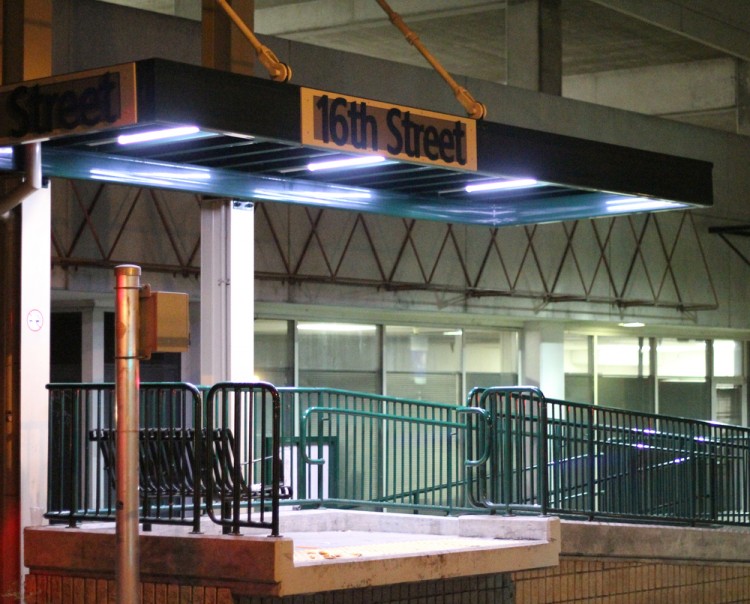
The light rail station at 16th and R Street was the location of a recent assault reported by a City College student. Photo by Evan E. Duran.

The Los Rios Police Department reported this week that on Aug. 30 at approximately 2:30 p.m., a City College student was sexually assaulted while waiting for her ride at the 16th Street Light Rail Station.

The incident, which was reported on Sept. 13, involved a student waiting at the light rail station when the suspect allegedly fondled her buttocks according to the report.

The victim confronted the suspect and he left the scene.

Police are describing the suspect as a male in his early 20s. The suspect is believed to be approximately 160 pounds and 5-feet-6-inches to 5-feet-8-inches tall with short black hair, medium-brown skin complexion, and a mustache.

The suspect was reported as wearing a light-blue shirt with horizontal stripes and dark pants at the time of the incident.

According to the report, the victim believes the suspect is another City College student who may have boarded the train with her at the City College station.

An investigation into this incident is ongoing.

If you have any information on this incident, contact the LRPD at (916) 558-2221.

Posted in Briefs, News, Sac City Express (SCC) | Tagged , , , , , , , , | Leave a comment

City College honors Americans killed in Libya

Campus flag to be flown at half-staff through Sept. 16

Originally published Sept. 15, 2012 by SacCityExpress.com

The flag is flown at half-staff at City College in honor of the victims of the Libyan attack on Sept 13, 2012. Photo by Evan E. Duran.

City College’s American flag is being flown at half-staff through Sept. 16 at sunset to honor those killed in the attacks on the U.S. diplomatic facility in Benghazi on Sept. 11.

The attacks left four Americans dead, including the U.S. Ambassador for Libya, John Christopher Stevens, and three others in an act that U.S.officials are saying may be linked to extremists inspired by al-Qaeda, according to reports from the Washington Post.

Interim Public Information Officer for City College Crystal Lee said that this action is “effective immediately in accordance with a Presidential Proclamation issued from the White House.”

A video of President Obama’s full response to the Libya attacks is available here.

Posted in Briefs, News, Sac City Express (SCC) | Tagged , , , , , , , , , , , , | Leave a comment

Free concert at SCC Sept. 16

Camellia Symphony Orchestra hosts family event

Originally published Sept. 14, 2012 by SacCityExpress.com

Camellia Symphony Orchestra will be at The Performing Arts Center of City College. Photo courtesy of Steve Kolb.

Students, families and community members who enjoy live music and a fun time are in for a treat.

On Sept. 16, the Camellia Symphony Orchestra will host a free family concert event from 2-3 p.m. at City College’s Performing Arts Center. The event is open to anyone in the Sacramento region.

In addition to the concert, there will be an Instrument Petting Zoo at 1 p.m., which will allow children to go hands-on with the music makers. A Fun Shop Art Station, where kids can create their very own work of art, will be presented by the Very Special Arts organization.

The concert series, which the Camellia Symphony Orchestra says has been going on for over 10 years, is sponsored by The Sacramento Bee, Wells Fargo, Clarksburg Wine Company, the Sacramento Metropolitan Arts Commission, and Cyberguys.

More information is available at www.camelliasymphony.org or by calling (916) 929-6655.

Posted in News, Sac City Express (SCC) | Tagged , , , , , , , , , , , | Leave a comment

Brush up on your writing

Writing Center workshops offer help

Originally published Sept. 14, 2012 by SacCityExpress.com

The Writing Center at City College will have a workshop from Sept. 17 through Oct. 1 in LR 144. Photo by Kate Paloy.

Students who find themselves with an overwhelming number of red marks on edited essays and other writing assignments or who don’t know where to start on an essay may want to take advantage of the City College Writing Center’s September workshops.

From Sept. 17 through Oct. 1 there will be a series of nine writing workshops held in the Writing Center, with topics ranging from writing a paragraph to writing a research paper.

These workshops last approximately one hour and are open to any student who wants a little extra help enhancing their academic skills and confidence.

For more information, visit the Writing Center in LR 144 or call (916) 558-2126.

A full list of dates, times and areas of focus is available here.

Posted in Briefs, News, Sac City Express (SCC) | Tagged , , , , , , , , , , , , | Leave a comment